


2027 is another election year for some of Africa’s most consequential countries, and once again many Africans are spitting fiery rhetoric about “protecting their vote” and ensuring that the leadership they want gets into office despite the expected shenanigans of the electoral authorities in their respective countries.
In this commentary, Senior Reporter @Big_Mck asks a simple but important question: if the institution of electoral democracy, which is supposed to give people the power to choose their own government consistently does the opposite, and must be forced using widespread physical violence to even pretend to do its job, then why exactly do so many Africans continue to reflexively defend the existence of this non-performing institution? Were Africans made to exist at the mercy of electoral democracy, or was electoral democracy made to exist at the mercy of Africans?
Could it perhaps be time to ditch what is already known to not work, and try something that actually does what it says on the tin?
Ethiopia Boosts Domestic Production With Its “Made In Ethiopia” Initiative
Ethiopia is boosting its domestic production for its citizens through an indigenous initiative. This initiative has seen over a million jobs created between 2021 and 2025, and the local market share for Ethiopian businesses skyrocket.
Yet this same country’s government is allowing itself to be used by Western powers as a weapon against the rest of Africa.
It is left to the people of Ethiopia to recognize whose interests their current leadership truly serves, and respond accordingly.
Aliko Dangote: Foreign Shipping Mafias Want to Enslave Africans
Africa’s richest man, Aliko Dangote, recently launched a shipping fleet to circumvent what he refers to as “foreign shipping mafias” that dominate Africa.
He says these companies enslave Africans. Do you agree? Drop us a comment.
Video credit: Nairobi Securities Exchange PLC
Julius Malema: EFF Fights for Black Ownership with Control
In this clip, Economic Freedom Fighters President Julius Malema argues that Black South Africans owning businesses does not mean they control them. He gave the example of African Rainbow Minerals Chairman Patrice Motsepe, who is “worth” $3.4 billion, yet owns only 40 per cent of the company. A Broad-Based Economic Empowerment trust owns 14 per cent. Without more than 50 per cent ownership, Motsepe doesn’t control African Rainbow Minerals, which raked in $65 million in 2025.
Malema argues symbolic ownership is not enough when control remains in non-African hands. What do you make of his argument?
Video credit: BusinessDayZA (YouTube)
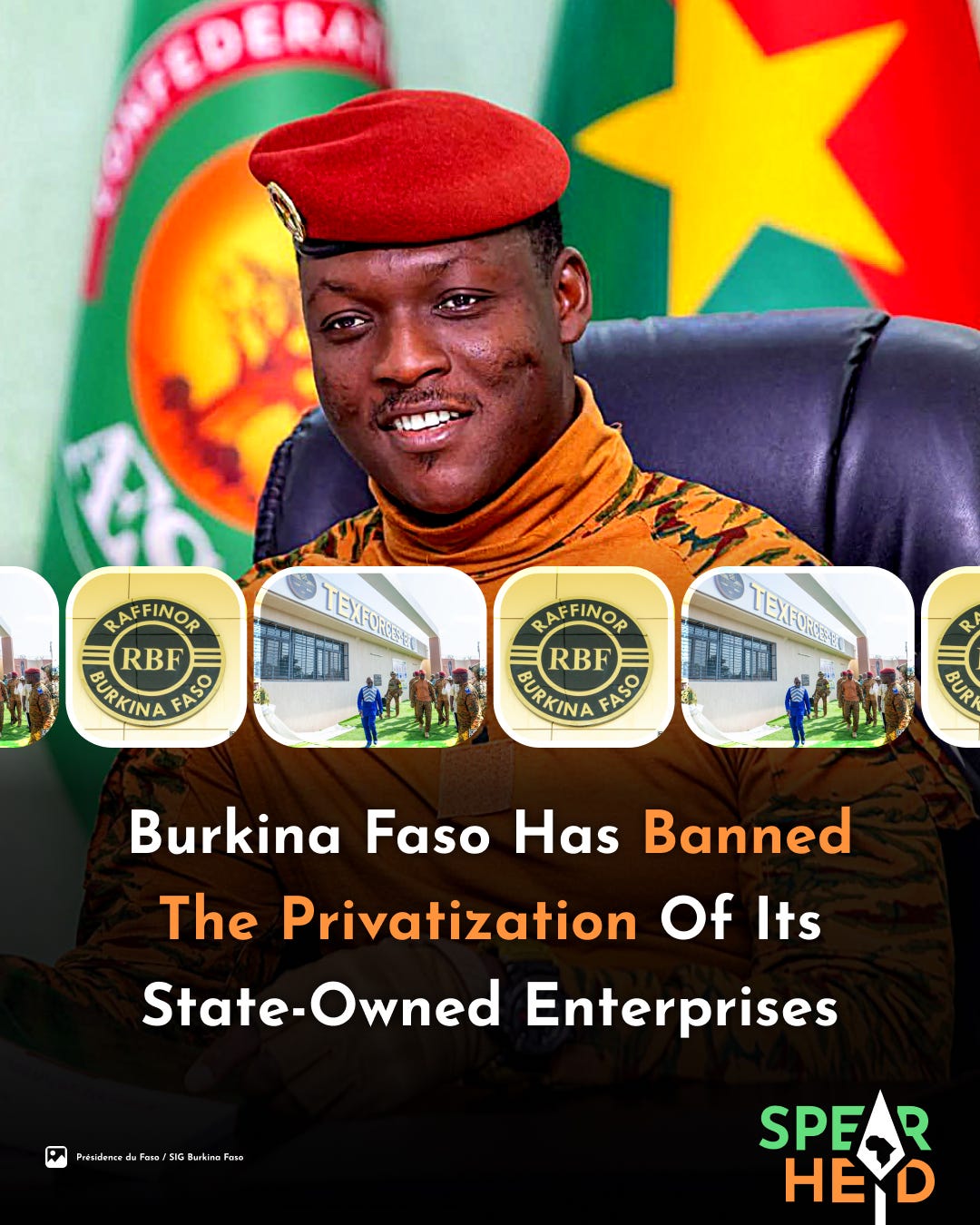
Burkina Faso Bans Privatization Of State-Owned Enterprises
On October 19, 2026, Burkina Faso’s People’s Legislative Assembly unanimously adopted a law banning the total or partial privatization of state-owned enterprises. Burkinabé state companies like CIM-SAHEL (cement), TEXFORCES-BF (textiles) and RAFFINOR-BF (gold) can no longer be legally privatized.
Follow The Spearhead on the following platforms:
TikTok - http://tiktok.com/@spearhead_af
Youtube - https://www.youtube.com/@african_spearhead
Instagram - http://instagram.com/spearhead_af
Facebook - https://facebook.com/spearheadafrica
Rumble - rumble.com/user/spearhead_af
X - x.com/spearhead_af